In gardening, when it comes to succulents, Jade plant and Crassula ovata are among the most common and most loved plants. Almost every plant lover wants to have at least one plant at home.
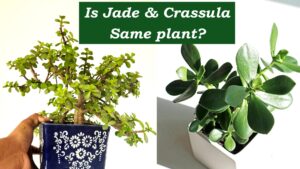
They look so similar, that most people believe Jade and Crassula ovata are the same plant. Even on the internet and other social media platforms, you will find that both are the same plant.
But did you know? They both are completely different plant! Yes, your read it right. |
Here – I am sharing my expereince:
When I made a video about the jade plant on my YouTube channel, many plant lovers commented, saying, “Ma’am, this isn’t a Jade plant; it’s actually Crassula ovata.”
Honestly, this surprised me – after reading comments of many users —it clearly shows that even today, many plant lovers think Jade and Crassula ovata are the same plant.
I know this from personal experience. I grow both Jade and Crassula ovata plants and care for them regularly.
Over time, I’ve noticed that although they look similar, they respond very differently to similar care, such as sunlight, watering, growth patterns, and overall care.
This made me realize that not everything we see or hear on the internet is always true.
In this article, I’ll share the real differences between Jade and Crassula ovata, so you can clearly understand how these plants are similar—and more importantly, how they are different—ensuring you care for each one the right way.
Difference Between the Jade Plant and Crassula Ovata
1. First difference is Leaf Size
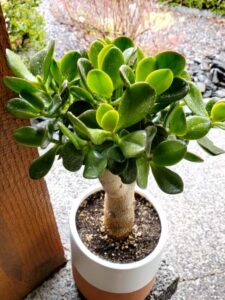
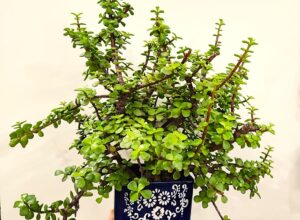
The leaves of the Jade plant are usually small in size and the leaves of Crassula ovata are larger in size.
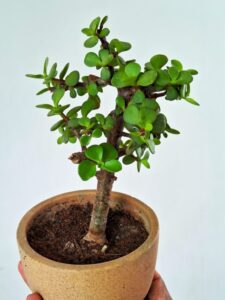
- Crassula ovata seems a bit sturdier and compact than the jade plant due to its larger leaf size.
2. Sunlight Requirements
Both plants need sunlight to grow, but their sunlight requirements clearly distinguish between jade and Crassula ovata.
As per my experience:
The Jade plant is a sun-loving plant and requires at least 3 to 4 hours of direct sunlight daily for healthy growth.

Meanwhile, Crassula ovata prefers bright, indirect light and can be placed indoors near a window where the light is medium.
- Keeping Crassula ovata outdoors in direct light can cause the leaves to fade and stunt their growth.
Because their sunlight requirements differ so much, it’s clear that jade and crassula are two different plants. Even though they belong to the same family, they are distinct plants and have different needs.
3. Watering Needs
Jade and Crassula ovata are both succulents, so they have similar watering needs. They store water in their leaves, hence they require less water to survive.
- Water only, when soil is completely dry.
4. Overwatering Tolerance
Although both plants are succulents, their tolerance for overwatering varies:
As per my experience: a Jade plant recovers easily from overwatering; it’s no more sensitive than the Crassula ovata plant.
- Whenever my jade plant gets overwatered, I have noticed it recovers on its own after a few days. Being a succulent, it’s also considered a hardy and low-maintenance plant.
Placing it in direct sunlight will help it recover within 2-3 days.
Meanwhile – Crassula ovata is much more sensitive to overwatering than the Jade plant.
- If accidentally Crassula ovata overwatered, its roots will rot and leaves turn brown, making it difficult to recover.
5. Signs of Overwatering
Both plants experience some changes when they are overwatered.
Jade Plant:
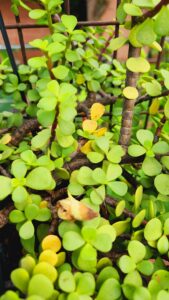
- The jade plant’s leaves turn yellow, which means the plant is getting too much water.
Crassula Ovata:
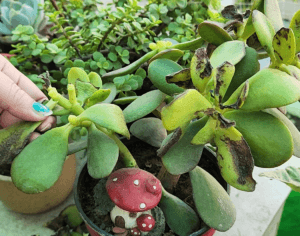
- Crassula ovata leaves turn brown when overwatered. This indicates that plant is receiving too much water.
6. Size and Growth
We can easily distinguish between the two plants by their size. But some people still consider them the same plant.
Let me tell you –
The Jade plant grows a little slower and is smaller in size than the Crassula ovata.
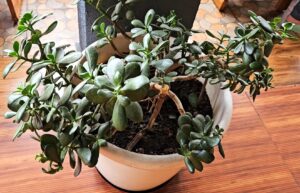
- On the other hand, the Crassula ovata grows well and can become a small tree with the right location and care.
- Some plants can reach up to 3 feet tall.
7. Season & Temperature
Both plants prefer to grow in different seasons and temperature.
Jade plant – The jade plant is a summer plant and grows well in direct sunlight. It is a sun-loving plant and thrives in warm temperatures between 25°C and 35°C.
- In winter, the jade plant enters a dormant period, and its growth slows down.
Crassula ovata: Crassula ovata prefers cool weather and grows well in winter or mild climates. The best temperature for Crassula ovata is 18°C to 25°C.
At last –
So, we have come to the conclusion – these seven points clearly indicates that while both Jade and Crassula ovata are succulents, they are not the same plant.
- Each has its own care requirements, growth patterns, and different responses to sunlight, season and temperature.
Through this article, I have shared my personal observations and cleared up a common confusion about the difference between a Jade plant and a Crassula ovata. I hope this will help you correctly identify and care for your plant.
If you found this article helpful, please share it with your friends and the gardening community.
Because when it comes to gardening—sharing knowledge is caring. 🌱
——————-
Follow our Social media channel:
1. Voice of Plant – YouTube Channel
2. Voice of Plant Facebook Page
3. Instagram Voice of Plant Channel
Happy gardening!
FAQs on Jade and Crassula ovata
- During which season does the Jade plant thrive the most?
Ans. The Jade plant thrives best in the summer season.
2. Between Crassula ovata and the Jade plant, which one grows taller?
Ans. Crassula Ovata grows taller and can attain more height.
3. Which plant has small size leaves — Crassula ovata or Jade?
Ans. Jade plant leaves are small in size and more compact.
4. What are Succulents?
Ans. Succulent plants store water in their leaves, stems or roots , so that they can survive well in dry conditions also.