


A few years ago, my Tulsi plant used to dry up frequently, and I felt frustrated because I thought I was taking proper care. But, slowly, I realized that I was making small mistakes without even noticing them.
Is your Tulsi plant wilting, leaves turning black or brown, falling off, or has its growth suddenly stopped? Don’t worry – you’re not alone. Many plant lovers face the same problem with their Tulsi plant.

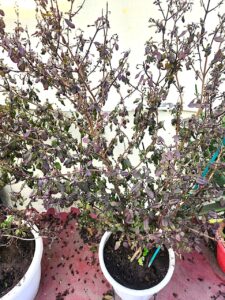
Why Tulsi Plant Keeps Drying Out
If your Tulsi plant is drying up frequently, it is usually due to improper watering, lack of sunlight, poor soil and other minor mistakes that gradually weaken your Tulsi plant.
One great thing you’ll be happy to know that – Tulsi is a very hardy plant, and if cared for properly, it can survive and thrive in your garden for many years.
I have been growing Tulsi for over 5-6 years, and in this article, I will share my experiences and 7 most common reasons why Tulsi plants dry out — along with natural and practical ways to revive them quickly.
7 Common Reasons Why Tulsi Plant Keeps Drying
While taking care of Tulsi plants for the last few years, I have noticed that Tulsi plants usually dry out because of a few common mistakes. Many gardeners make these mistakes without realizing it, and over time the plant becomes weak.
1. Watering in a wrong way
Watering a Tulsi plant doesn’t require any expertise, but it is a simple task.
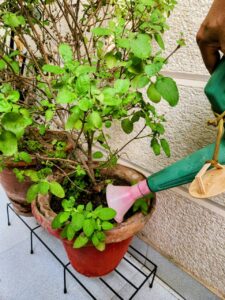
Case of Overwatering – I have seen many plant lovers watering their Tulsi daily (overwatering), thinking it will make their plant more healthy and bushier. After a few days, the soil stayed wet and the leaves started looking dull.
- Watering Tulsi plant daily is a big mistake.
Case of Underwatering – On the other hand, some people forget to water it for days (underwatering), especially in summer. When the soil becomes completely dry for too long, Tulsi starts wilting quickly.
Why it harms the Tulsi plant?
Both overwatering and underwatering stress the roots and cause the plant to die.
My expereince: How I water my Tulsi plant –
- The simple rule I follow is — I touch the soil before watering.
- If the top layer feels dry, I water it . If it’s still moist, I wait for some days more.
2. Using Poor Soil Quality
I have seen many gardeners plant their Tulsi directly in normal garden soil without mixing compost or any organic matter. In the beginning, the plant looks perfectly fine. But after a few months, the soil becomes hard and tight, especially after regular watering.
- When this happens, the roots cannot spread properly, and the plant gradually becomes weak.
What I Personally Do
I always use well-draining, nutrient-rich soil mixture.
- Every two months, I gently loosen the top layer of soil and add vermicompost, cow dung compost or leaf compost or some other organic fertilizer. This keeps the soil soft and fertile and my Tulsi plant stays healthy, green, and dense.
3. Not providing proper Sunlight to Tulsi plant
Tulsi is a summer plant and needs at least 5–6 hours of direct sunlight daily for healthy growth.
However, I have noticed that many gardeners keep their Tulsi plant in bright light, partial shade where sunlight is limited which leads to weak growth. Due to lack of sunlight, the plant may start dropping leaves, wilting, or drying up.
Note:
- Without proper light, Tulsi cannot grow properly and may even die over time.
What I do:
I keep my Tulsi in a sunny spot where it gets 5–6 hours of direct sunlight. This keeps the leaves green, healthy and bushy.
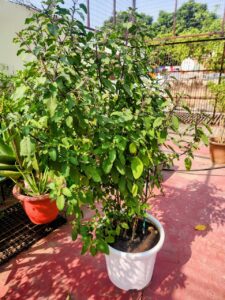
4. Not Pruning Flowers and Seeds
Some people do not prune the flowers and seeds of their Tulsi plant. When flowering (manjari) is not removed the plant spends most of its energy on seed production. As a result, it becomes weak and may start drying out.


What I do:
- I keep pruning and remove flowers (manjaris) and seeds of my Tulsi plant every 15 to 20 days. This simple practice helps my Tulsi plant stay healthy, green, and bushy.
5. Not Providing proper Nutrients to Tulsi
Many gardeners do not give essential nutrients (fertilizers) to their Tulsi plant, which weakens its growth and overall health.
What I do:
- I feed my Tulsi plant with organic fertilizer once or twice in a month. This keeps my Tulsi plant keep growing and stay healthy.
- I use organic fertilizers such as Cow dung liquid fertilizer, Vermicompost, Mustard cake liquid fertilizer, Groundnut cake liquid fertilizer, Seaweed liquid fertilizer, and many more.
6. Pest and Disease Problems in Tulsi
Many gardeners are not aware of pest and disease problems. Because of this, they do not take proper treatment. Over time, the plant becomes weak and starts dying.
Tulsi plants are commonly affected by pests like aphids, spider mites, and whiteflies. During humid weather, fungal problems such as powdery mildew can also develop.
What I do: How I care my Tulsi plant
- I keep checking my Tulsi plant every 10 to 15 days and If I notice any attack of pests or disease symptoms, I immediately start treatment.
- As a preventive measure, I spray neem oil or neem leaf solution on my plants every 15–20 days. This keeps pests under control and helps maintain a healthy, disease-free Tulsi plant.
7. Effect of Extreme Weather on Tulsi
This point may look simple, but many gardeners ignore it. Extreme weather conditions, whether very hot summers or very cold winters, can seriously damage a Tulsi plant.
Some people leave their Tulsi plants in an open areas during extreme heat or cold without any protection. As a result, the plant becomes stressed, weak, and may eventually dry out.
What I do:
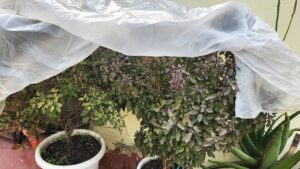
I take extra care of my Tulsi during extreme weather.
- In extreme hot summers and cold winters, I shift the plant to a protected area, such as under a green net or under a roof. This helps protect it from harsh sunlight, cold winds, and sudden temperature changes.
FAQs on Why Tulsi Plant Keeps Drying Out?
Qs1. Does pruning make a Tulsi plant more bushy?
Ans. Yes, regular pruning encourages the plant to produce more branches and stems.
Qs2. Can a Tulsi plant survive in indirect sunlight?
Ans. No, Tulsi plant does not grow weel in indirect sunlight. It needs at least 4-6 hours of direct sunlight daily for healthy growth.
Qs3. Which organic fertilizers can be used for Tulsi plant?
Ans. You can use organic fertilizers like cow dung liquid fertilizer and vermicompost to feed your Tulsi plant.
4. How should I Water a Tulsi plant?
Ans. Water your Tulsi plant only when the top layer of soil feels dry. If the soil is still moist, avoid watering to prevent root rot.
Qs5. How can I protect my Tulsi plant from extreme cold?
Ans: During extreme cold, shift your Tulsi plant to a protected area, such as under a green net or under a roof. This helps protect it from cold winds and sudden temperature changes.
Happy Gardening !
Follow our Social media channel:
1. Voice of Plant – YouTube Channel
2. Voice of Plant Facebook Page
3. Instagram Voice of Plant Channel
Make Your Own Garden!