


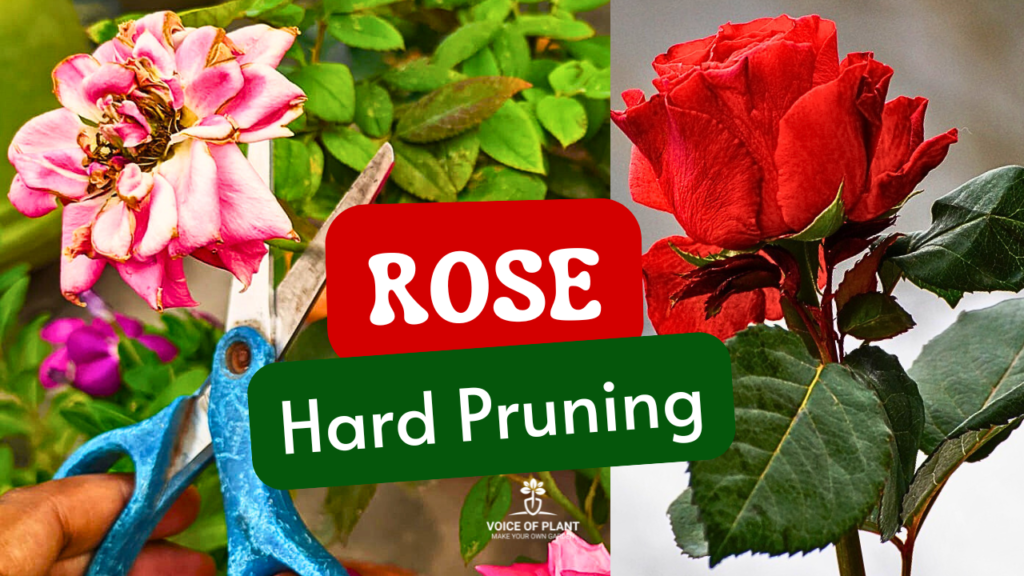
Rose Hard Pruning for Maximum Flowering
Do we grow roses for thorns or leaves? No, we grow them to enjoy the beautiful flowers they provide. But what should we do if our rose plant stops blooming or produces only a few flowers? With the arrival of autumn, it’s time to act. This season is ideal for pruning our rose plants and preparing them for winter, ensuring they bloom profusely and fill our garden with vibrant, abundant flowers.


1. Why pruning is crucial?
Pruning is one of the most crucial practices for ensuring that rose plants produce abundant blooms. While many gardeners fear cutting back too much, hard pruning—cutting the plant back significantly—can greatly increase flowering, especially when done at the right time and with the right techniques. Here’s a comprehensive guide to hard pruning your rose plants for maximum flowering.


(i) Why Hard Pruning is Essential
Hard pruning rejuvenates rose plants by encouraging new growth. Roses produce flowers on new wood, so cutting back old or weak growth in the right way gives the plant the energy it needs to focus on producing vibrant flowers.
- Without proper pruning, roses can become leggy, with fewer blooms and more foliage.
(ii) Timing the Pruning: Do It Before Peak Season
The best time for hard pruning roses is just before their peak blooming season. Since roses primarily bloom in winter, pruning at the beginning of autumn is ideal. This gives the plant enough time to produce new growth, which leads to abundant and healthy flowers later on. Make sure to prune at the right time to support optimal flowering.
2. How to Perform Hard Pruning
(i) Use Clean and Sharp Tools:
Always start with clean, sterilized, and sharp pruning shears or loppers.
- This helps to make clean cuts, preventing disease transmission.
(ii) Cut at an Angle:
Make cuts at a 45-degree angle, about ¼ inch above an outward-facing bud.
- This encourages the new growth to develop outward rather than inward, maintaining good air circulation within the plant, which reduces the risk of fungal diseases.
(iii) Remove Dead, Diseased, and Damaged Wood:
Start by cutting away all dead, diseased, or damaged branches.
- This helps the plant direct its energy toward producing healthy new growth.
(iv) Cut Back Weak Growth:
Identify and remove weak, spindly growth that won’t support strong flowers.
- This includes branches that are thinner than a pencil, as these tend to produce fewer flowers.
(v) Shape the Plant:
For optimal flower production, aim to maintain an open, vase-like shape with plenty of space for air and light to penetrate the center of the plant.
- This is particularly important for hybrid tea roses, floribundas, and grandifloras.
3. The Role of Fertilizers After Pruning
After pruning, it is essential to feed the rose plant with a balanced fertilizer to encourage healthy regrowth. Many gardeners prefer to use organic fertilizers such as well-composted manure or a slow-release granular fertilizer rich in nitrogen, phosphorus, and potassium. This provides the essential nutrients the plant needs to produce an abundance of blooms.
Rose Fertilizer: Unlocking Maximum Flowering with Rose Radiant


Roses are heavy feeders and require specific nutrients to support their abundant flowering. While there are numerous fertilizers available on the market, Rose Radiant Fertilizer stands out as an excellent option for those looking to achieve vibrant blooms and healthy foliage.
Click here to purchase Rose Radiant Organic Fertilizer
Rose Radiant is an organic fertilizer designed specifically for rose plants.
- Rose Radiant provides the nutrients necessary to support vigorous growth and prolific flowering.
- This fertilizer is formulated to ensure balanced nutrition for roses, allowing the plant to focus on producing large, healthy flowers.
- Rose Radiant has been highly recommended for its ease of use, making it perfect for gardeners who prefer ready-to-use products that can be easily applied to the soil or sprayed directly onto the plants.
How to use Rose Radiant fertilizer
Liquid Fertilizer: For a more direct approach, Rose Radiant can also be applied as a liquid fertilizer.
- Mix it according to the package instructions and either water your roses with the solution or use it as a foliar spray, ensuring it reaches the leaves for quicker nutrient absorption.
Click here to read: Best Soil Mixture for Rose plant
4. Watering After Pruning
After a hard prune, your roses will need adequate water to support new growth.
- Water deeply, ensuring the soil is moist but not waterlogged. Regular watering is essential, especially if the weather is dry.
5. Keep an Eye on Pests and Diseases
New growth after pruning is vulnerable to pests and diseases.
- Keep an eye on your rose plants and take prompt action if you notice aphids, spider mites, or black spot fungus.
- Use an organic pesticide or insecticidal soap to manage pests and ensure your plant stays healthy.
By pruning at the right time, using the correct techniques, and providing proper aftercare, you can help your roses produce more flowers than ever before. Start preparing your roses now for a season full of beautiful blooms!
Follow our Social media channel:
1. Voice of Plant – YouTube Channel
2. Voice of Plant Facebook Page
3. Instagram Voice of Plant Channel
Happy Gardening!