


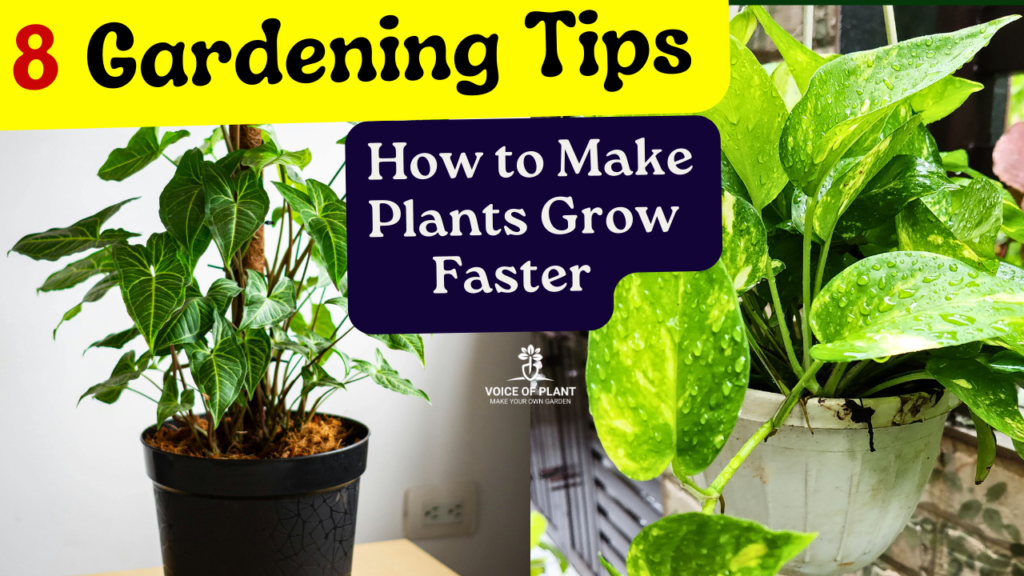
How to Make Plants Grow Faster
Growing plants faster is not just about luck; it’s about understanding what plants need and providing them with the right conditions to thrive.


Whether you are a gardening novice or an experienced green thumb, this guide will equip you with actionable tips to speed up plant growth while keeping them healthy. Let’s dive right in!
How to Make Plants Grow Faster
Understanding Plant Growth Basics
The Science of Plant Growth
Plant growth depends on the process of photosynthesis, where plants convert sunlight, water, and carbon dioxide into energy.
Nutrient uptake from the soil complements this process by supplying essential minerals like nitrogen, phosphorus, and potassium.
- These elements form the building blocks for healthy growth and development.
Factors Influencing Growth Rate
Several factors directly impact how quickly a plant grows:
1. Light: The right amount of sunlight fuels photosynthesis.
2. Water: Hydration is crucial for nutrient transport within plants.
3. Soil: Healthy soil provides nutrients and anchorage.
4. Temperature: Optimal warmth accelerates metabolic processes.
By mastering these fundamentals, you set the stage for faster plant growth.
1. Optimizing Soil for Faster Growth
1. Importance of Soil Quality
Healthy soil is the foundation of plant growth.
The ideal soil should be well-draining, rich in organic matter, and have a balanced pH (6.0 to 7.0 for most plants).
- Poor-quality soil can stunt growth, even if other conditions are perfect.
2. Amending Soil with Organic Matter
Incorporating organic matter like compost, fertilizer, or aged manure into your soil enriches it with nutrients.
- These materials also improve soil structure, making it easier for roots to penetrate and absorb nutrients.
Benefits of Adding Compost in Soil
When added to soil, compost improves its quality by providing essential nutrients and enhancing its texture.
- The organic matter in compost undergoes decomposition, releasing nutrients like nitrogen, phosphorus, and potassium, which are vital for plant growth.
- It also boosts the soil’s ability to retain moisture and support healthy root development.
- Compost introduces beneficial microorganisms into the soil, such as bacteria and fungi. These microbes break down organic matter further and make nutrients more accessible to plants.
- Compost acts like a sponge, helping the soil retain moisture.
2. Providing Adequate Watering
How Much Water Do Plants Need?
The key to successful watering lies in consistency.
- Overwatering can suffocate roots, while underwatering deprives them of essential hydration.
- Most plants thrive when the soil remains consistently moist but not soggy.
Tips for Efficient Watering
1. Water in the Morning: Early watering allows plants to absorb moisture before the sun evaporates it.
2. Use Drip Irrigation: This method delivers water directly to the roots, reducing waste.
3. Check Soil Moisture: Use your finger or a moisture meter to ensure you’re watering appropriately.
- Check the soil before watering.
A thoughtful watering schedule can significantly enhance plant growth rates.
Click here to read: How to Water Plants Correctly
3. Ensuring Proper Sunlight
Understanding Light Requirements
Different plants have different sunlight needs:
Sunlight is essential for photosynthesis. Ensure your plants receive the appropriate amount:
Full Sun Plants: Require 6–8 hours of sunlight daily (e.g., Tulsi, Curry leaf, Hibiscus, Roses, Marigolds, etc).
Partial Shade Plants: Thrive in bright and indirect light or 4–6 hours of morning sunlight (e.g., Peace Lily, Money plant (pothos), ferns, Aglaonema, etc.).
4. Nutrient Boosters for Plants
Choosing the Right Fertilizer
A balanced fertilizer with equal parts nitrogen, phosphorus, and potassium (e.g., 10-10-10) can work wonders. However, some plants have specific needs—for example, flowering plants benefit from phosphorus-rich formulas.
For Outdoor Plants: Apply organic fertilizers like cow dung compost, vermicompost or any other liquid fertilizer every 15–20 days.
For Indoor Plants: Feed them less frequently, about once every 45 days.
- Using organic options ensures sustainable growth without harming the environment.
Click here to read: Best Organic Fertilizers for Plants
5. Pruning and Maintenance
Benefits of Regular Pruning
Pruning is like giving your plants a haircut—it helps them grow stronger and look better.
- By cutting off overgrown or damaged parts, you allow your plant to focus its energy on new growth.
- Regular pruning promotes air circulation, prevents overcrowding, and reduces the chances of pest infestations.
- For flowering and fruit-bearing plants, it encourages more blooms and higher yields.
Removing Dead Leaves and Stems
Dead leaves and stems not only make your plant look messy but also waste energy.
- When these parts are removed, the plant can redirect its resources toward producing new leaves, flowers, or fruit.
- Use sterilized pruning shears to snip away dead material, and always cut at an angle to minimize stress on the plant.
Click here to read: Pruning of Plants Complete Guide
6. Controlling Pests and Diseases
Common Plant Pests
Unwanted visitors like mealybugs, aphids, spider mites, and whiteflies can wreak havoc on your plants. These pests often feed on sap, weakening the plant and slowing its growth. Signs of infestation include yellowing leaves, holes, and sticky residue on the foliage.
Natural Pest Control Methods
You don’t need harsh chemicals to protect your plants. Try these natural solutions:
- Neem Oil: A natural pesticide that disrupts pest lifecycles.
- Soap Spray: Mix mild dish soap with water to suffocate small pests.
These methods are not only effective but also eco-friendly.
7. Preventing Fungal Diseases
Fungal diseases like powdery mildew and root rot can stunt plant growth. To prevent them:
- Avoid overwatering, as excessive moisture creates a breeding ground for fungi.
- Ensure proper air circulation around your plants by spacing them adequately.
- Treat affected plants with a baking soda solution (1 teaspoon per gallon of water).
8. Avoiding Common Mistakes
Over-Fertilization Dangers
More fertilizer doesn’t always mean faster growth. Over-fertilizing can burn your plant’s roots and even kill it. Stick to recommended amounts, and opt for slow-release formulas to avoid overwhelming your plants.
Ignoring Plant-Specific Needs
Every plant is unique. While general tips work for most, it’s crucial to tailor care to each plant’s specific requirements.
- For instance, succulents need well-draining soil and minimal water, while tropical plants thrive in high humidity and rich organic soil.
Conclusion
Helping plants grow faster is all about providing the right balance of light, water, nutrients, and care. By optimizing these conditions and avoiding common mistakes, you can speed up growth while ensuring your plants stay healthy and vibrant. Remember, patience and consistency are key—your plants will thank you for the effort!
Also, read: How to Grow Healthy Plants at Home
Follow our Social media channel:
1. Voice of Plant – YouTube Channel
2. Voice of Plant Facebook Page
3. Instagram Voice of Plant Channel
Happy Gardening!