



Winter gardening always seems incomplete without marigolds. As the winter season approaches, these bright yellow and orange flowering plants become the favorite of every plant lovers. They not only add color and beauty to the garden but also attract pollinators, act as natural insect repellents, and even offer medicinal benefits.


Sometimes I feel that butterflies, bees and birds also eagerly wait for the marigold flowers to bloom, excited to visit the garden and taste their nectar.
So in today’s guide, let’s learn how to grow and care marigolds correctly and ensure your plants stay healthy and bloom profusely during the winter season.
How to Grow Marigold at home
1. Choosing the Right Spot
Marigolds bloom best in bright sunlight. Even though they are winter plants, they still need 4 to 5 hours of direct sunlight each day.


- So, a good sunny corner will keep your marigolds healthy and blooming.
Where I keep my marigold plants:
- I keep my marigold plants in a sunny place on the terrace where they get good sunlight every day. As a result, they are healthy and blooming.
Note:
- Less sunlight = not good growth and less flower.
I have done a experiment on my one marigold plant:
Just for research – I had placed my marigold plant in a spot where it only received 2 hours of sunlight. Care and everything was same but it wasn’t flowering and wasn’t growing properly.
2. Best Pot size for Marigold
How big a pot should a marigold plant be kept in? This is very important.


When choosing a ideal pot for marigolds, always ensure they have enough room for their roots to spread.
Based on my gardening experience, an 8- to 10-inch pot is ideal for marigold plants.
- Marigold roots do not spread much and if you keep it in a large pot, then excessive watering will spoil the plant.
- This size (8- to 10-inch) allows for proper drainage and gives the plants plenty of room to grow and thrive.
My expereince –
- I have planted some marigold plants in 12 inch pots but their growth is not as good as the plants in 8 to 10 inch pots.
Pot type: Clay pots are always best for marigold plants. Clay pots allow for air circulation and absorb water when overwatered.
3. Soil Mixture for Marigold
Soil mixture for marigold plants should always be nutrient-rich, well-draining, and slightly loose.
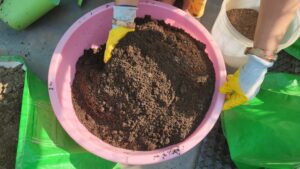
- Therefore, use soil mix that drains easily and is rich in organic nutrients. Planting marigold in such soil mix will result in good growth and abundant flowering.
Do not worry, we have make your task easy. Read this complete guide on how to make soil mixture for winter plants.
4. How to Water Marigold plants
Some flowering plants require more water, while others require less. Marigold plants should always maintain a moist soil.
- If the soil dries out completely, the plant begins to wilt.

- Avoid overwatering – If the soil is moist and you still water it, the plant may develop fungus.
- Its roots are very sensitive and delicate, making it susceptible to root rot.
How I water my marigold plants:
- I water it thoroughly once, until water drains from the holes in the bottom.
- I check the soil daily. If the soil is wet on top, I don’t water. When I feel the top of the soil is dry after 2 or 3 days, I water it.
5. Repotting Marigold plant
Some plants experience transplant shock and die but marigolds do not experience transplant shock.
How to repot
- You can bring a marigold home from a nursery between October and March and repot it. However, do not repot it immediately after bringing it back.
- Allow it to adjust to your home for two days. If everything goes well for two days, you can repot it on the third day.
- Repotting should be done in the evening only, not in the morning or afternoon.
- Water it thoroughly after repotting.
6. Pruning tips for Marigold
When you bring your marigold plant home, it’s not very dense. So, how to make it healthy and bushy?
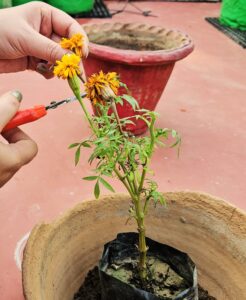

It’s simple, pruning is the right way. Pruning is essential to keep marigolds healthy and bushy.
People often don’t prune, and if they do, they do it incorrectly. So, here’s how to prune:
- Promptly remove or prune any faded flowers.
- Second, remove any dry and wilted stems and leaves.
7. Fertilizers for Marigold
Fertilizer is crucial for marigold plants. Many plant lovers complain that their marigolds were healthy at the nursery, but when they were brought home, they weren’t growing well. The buds were turning black, drying out, and not growing.
This is due to a lack of proper fertilizer for marigolds. Marigolds prefer two organic fertilizers: mustard cake liquid fertilizer and banana cake liquid fertilizer.
- Apply these organic liquid fertilizers to the soil; do not spray on the leaves.
- Duration: You can use either of these liquid fertilizers every 15 to 20 days.
8. How to protect Marigold from Pest attack
Marigolds are also prone to insect infestations, including fungal infections and pests like aphids, spider mites, mealybugs, and powdery mildew.

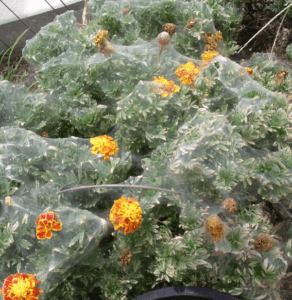
How I protect my marigold plants:
- I spray neem leaves solution every 10 to 15 days. If you can’t make neem leaves solution, you can use neem oil (water soluable).
- To avoid fungus attack, I give Trichoderma in the soil.
For spider mites, powdery mildew, or any other fungus infestation on leaves:
- immediately cut off all affected parts,
- wash the plant with clean water,
Make a solution:
- Mix a small amount of Trichoderma, neem oil, Dettol soap, and baking soda in 1 liter of water.
- Spray the solution onto the leaves and apply it to the soil.
- Repeat every alternate days in the evening and rinse the plant with clean water the next morning.
Soon, all the insects will be gone and your plant will be healthy again.
These were expert care tips for growing and caring for marigolds. By following these tips, your marigolds will stay healthy and bloom throughout the winter season.
Plant these attractive yellow flowers and attract pollinators to your garden.
Follow our Social media channel:
1. Voice of Plant – YouTube Channel
2. Voice of Plant Facebook Page
3. Instagram Voice of Plant Channel
Happy Gardening!