


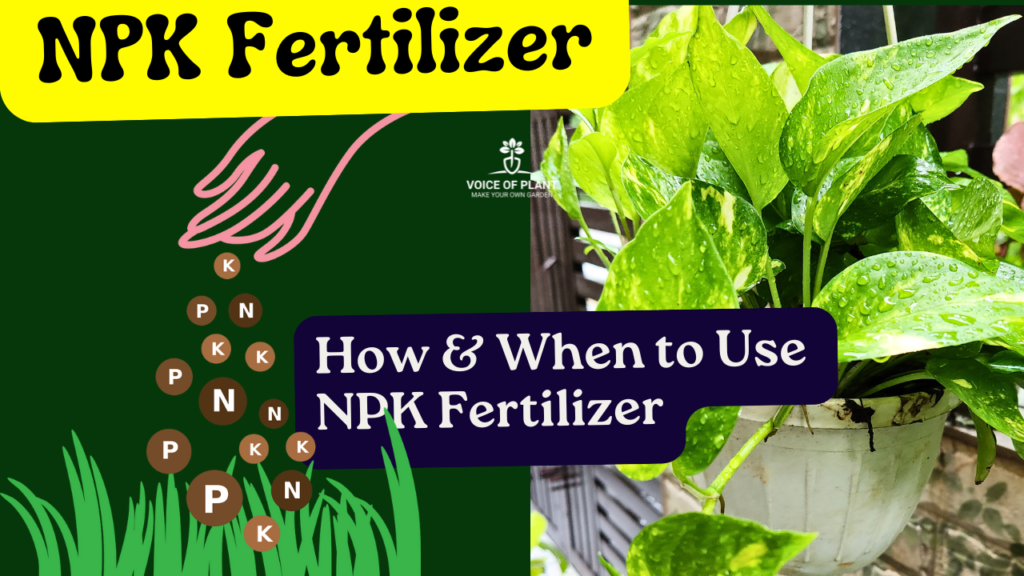
What is NPK Fertilizer? How and When to Use NPK Fertilizer
What is NPK Fertilizer?
The term “NPK” represents the chemical symbols for nitrogen (N), phosphorus (P), and potassium (K).
These are the three primary macronutrients that plants need in significant amounts. These elements are essential for the healthy growth of plants and are often found in fertilizers to boost plant productivity and yield.
Nitrogen (N): Promotes leafy and vegetative growth.
- It’s crucial for photosynthesis and is responsible for the lush green color of plants.
Phosphorus (P): Encourages root development and flowering.
- It helps transfer energy throughout the plant and is vital during the plant’s early stages of growth.
Potassium (K): Enhances overall plant health, improves disease resistance, and supports fruit and flower formation.

What is NPK Fertilizer? How and When to Use NPK Fertilizer
The Role of Nitrogen, Phosphorus, and Potassium in Plant Growth
Each component plays a unique role in a plant’s life cycle.
- For example, nitrogen drives photosynthesis, which fuels plant growth.
- Phosphorus aids in energy storage and root development, while potassium ensures plants can withstand environmental stressors like drought or cold weather.
Together, these nutrients work harmoniously to maximize growth, improve yields, and enhance the overall health of plants.
Types of NPK Fertilizers
1. Organic vs. Synthetic NPK Fertilizers
NPK fertilizers are categorized into two types: organic and synthetic.
Organic Fertilizers:
- Derived from natural sources such as compost, manure, bone meal, and seaweed.
- These fertilizers release nutrients slowly, improving soil structure and microbial activity.
Synthetic Fertilizers:
- Manufactured using chemical processes.
- These fertilizers provide quick nutrient availability and are often preferred for immediate results but may lack long-term soil benefits.
2. Granular vs. Liquid NPK Fertilizers
Granular Fertilizers: Sold in solid form, these are easy to store and can be applied directly to the soil. They offer slow, controlled nutrient release over time.
Liquid Fertilizers: Dissolved in water, they provide nutrients rapidly to plants. These are ideal for foliar feeding and are often used in hydroponics or for quick nutrient fixes.
Must read: Best Organic Liquid Fertilizers for Plants
Benefits of Using NPK Fertilizers

Balanced Nutrition for Plants
NPK fertilizers ensure that plants receive all three macronutrients in a balanced ratio.
- This balance promotes steady growth, strong roots, healthy leaves, and robust flowering or fruiting.
Increased Yield and Quality
Using NPK fertilizers effectively leads to higher crop yields, better fruit size, improved flower quality, and healthier plants.
- They also enhance the taste, color, and nutritional value of fruits and vegetables.
How to Use NPK Fertilizer Effectively
Choosing the Right NPK Ratio for Your Plants
Understanding the needs of your plants is key to selecting the right NPK fertilizer.
Different stages of plant growth and various plant species require specific nutrient ratios.
Understanding NPK Ratios (e.g., 10-10-10)
NPK ratios indicate the percentage of nitrogen, phosphorus, and potassium in the fertilizer.
- For example, a 10-10-10 fertilizer contains 10% nitrogen, 10% phosphorus, and 10% potassium. This ratio is suitable for general gardening needs, providing balanced nutrition for most plants.
Matching NPK Fertilizers to Plant Needs
Different plants thrive on varying ratios. For instance:
1. Leafy Vegetables (e.g., spinach, lettuce): Prefer nitrogen-rich fertilizers for vibrant green leaves.
2. Flowering Plants (e.g., roses, hibiscus): Require phosphorus-heavy fertilizers to boost blooms.
3. Root Crops (e.g., carrots, potatoes): Benefit from potassium-dominant fertilizers for strong, healthy roots.
Dos and Don’ts of Using NPK Fertilizers
Do: Follow label instructions carefully to avoid over-fertilizing, which can harm plants and soil.
Don’t: Apply fertilizers during the hottest part of the day, as this can lead to nutrient loss through evaporation.
Do: Water the soil after application to help the nutrients seep into the ground.
Don’t: Use too much nitrogen for flowering plants, as it may hinder bloom production.
When to Use NPK Fertilizers
Timing is critical for effective fertilizer use. Different plants and growth stages require fertilization at specific intervals.
1. During Planting
When preparing your soil, incorporate a balanced NPK fertilizer to give plants a healthy start.
- This ensures the roots establish well in nutrient-rich soil.
2. During Active Growth
As plants grow and develop leaves, stems, and flowers, they require consistent feeding.
- A nitrogen-heavy fertilizer is often used at this stage for optimal vegetative growth.
3. Before Flowering or Fruiting
Switch to phosphorus and potassium-rich fertilizers during the flowering or fruiting phase. This promotes better blooms, fruits, and overall plant health.
4. Seasonal Considerations
Fertilizer application should also align with seasonal changes:
- Spring: Ideal for most plants, as they emerge from dormancy.
- Fall: Suitable for preparing perennials and trees for winter dormancy.
Conclusion
NPK fertilizers play an essential role in modern gardening and agriculture. By understanding the importance of nitrogen, phosphorus, and potassium and choosing the right fertilizer for your plants, you can maximize growth, boost yields, and ensure a thriving garden or farm.
Follow our Social media channel:
1. Voice of Plant – YouTube Channel
2. Voice of Plant Facebook Page
3. Instagram Voice of Plant Channel
Happy Gardening!