


Medicinal plants are nature’s remedies. They are special plants that have the power to heal and improve our health. These plants have been used for centuries to treat various illnesses and ailments.
In this article, let’s explore more medicinal plants you can grow at home and discover how they can benefit us.
4. Curry Leaf
It is also known as ‘Meetha Neem’ or ‘Dr. Sensitive.’
- Curry leaves possess numerous healthful properties that aid in the treatment of various health conditions.
- Nowadays, dried curry leaves are available in the market and are primarily used as spices in the kitchen.
Medicinal benefits of Curry leaves
Many medicinal properties are found in curry leaves which are as follows:


-
Consuming curry leaves is beneficial for diseases related to the liver and heart.
-
They reduce the risk of anemia and help control blood sugar levels in the body.
-
Curry leaves are also effective in treating skin conditions, including spots and pimples.
-
The antioxidants in curry leaves contribute to heart health by reducing bad cholesterol and increasing the levels of good cholesterol.
-
They can also be consumed to alleviate sinus infections, coughs, and colds.
- It is suggested to incorporate a daily routine of consuming 6-8 leaves on an empty stomach as a potential solution for the mentioned health issues.
“High levels of vitamins A and C are found in the curry leaves.”
5. Patharchatta Plant (kalanchoe Pinnata)
Pattharchatta is an Ayurvedic plant with numerous medicinal properties.
- It is commonly used to address various health-related issues at home.
- The healing properties found in Pattharchatta are beneficial in treating a wide range of diseases.
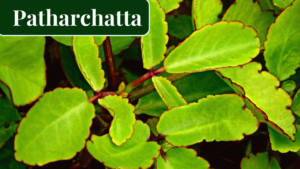

Medicinal benefits of Patharchatta
The significant health benefits derived from the use of this potent and evergreen plant include the following:
1. If you have kidney stone problems, Pattharchatta is a natural remedy for your health.
2. The juice extracted from Pattharchatta leaves contains special elements that help control blood pressure levels.
3. Stonecrop leaves contain specific compounds that accelerate the wound-healing process.
4. Additionally, its anti-inflammatory properties can alleviate symptoms such as swelling, redness, and irritation.
How to use Patharchatta as a medicine?
1. Take 2-3 leaves, grind them, and mix the paste with honey.
2. Consume this mixture on an empty stomach with lukewarm water daily to treat kidney stones.
3. It can also provide relief from stomach aches.
“Patharchatta plant can be easily grown from a single leaf cutting.”
6. Night Jasmine (Parijat)
The Parijat plant, also known as Night Jasmine, Harsingar, is renowned for its abundant medicinal properties, which make it effective in treating various diseases.
- These small-petaled, white Harsingar flowers are highly fragrant and bloom only at night, earning them the names ‘Night Blooming Jasmine’ or ‘Queen of the Night.‘
- Parijat is rich in antioxidants, anti-inflammatory, and antibacterial properties, making it valuable in combating a wide range of illnesses.”
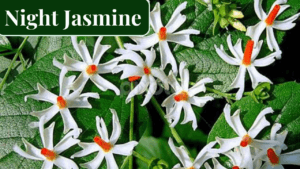

Medicinal benefits of Parijat (Night Jasmine)
The leaves, flowers, and bark of this plant contain medicinal properties.
1. It is highly effective for arthritis patients.
2. Its leaves can be used to treat colds, flu, and to expel stomach worms.
3. It aids in healing various types of wounds.
4. It is beneficial for individuals with diabetes.
5. It provides benefits for eye diseases.
6. It is also used to treat fever.
7. The properties of Parijat can be useful in managing ringworm.
8. Pile disease can be treated by consuming one seed of Parijat daily.
9. The juice of its flowers is considered effective for heart health and may help prevent heart disease.
How to prepare Parijat for the treatment?
1. Take 6-7 leaves of Parijat.
2. Wash them with water.
3. Boil them in half a liter of water until the quantity reduces to one-fourth.
4. Strain the liquid and consume it with sugar candy.
How to apply it on the wounds?
- Sometimes wounds take time to heal.
- To expedite the healing process, apply a paste of Parijat leaves to the wounds.
- Parijat has antifungal and antibacterial properties, which help prevent the wound from spreading.
7. Bael Plant (Stone Apple)
Bael, also known as the stone apple, is a significant medicinal plant.
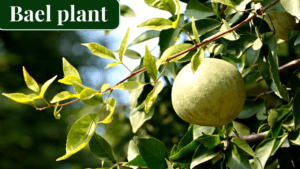

- Ayurveda mentions many of its benefits. The fruit has a tough outer shell, but the inside is soft, pulpy, and contains seeds.
- Bael is used in the preparation of various medicines, and it also features prominently in many delicious dishes.
“Bael (stone apple) is rich in protein, beta-carotene, thiamin, riboflavin, and vitamin C.”
Medicinal benefits of Bael plant


1. Bael fruit can be used to alleviate diarrhea and dysentery.
2. Bael juice is employed to purify the blood.
3. It also enhances the functioning of the kidneys.
4. Consuming Bael fruit aids in the effective removal of impurities from the body.
5. In cases of cholera, consuming Bael juice and Belpatra powder with water provides relief.
How to consume Bael?
1. To treat the above-mentioned ailments, consume the leaves with salt.
2. To prevent heat stroke, it is advisable to drink Bael juice because it has cooling properties. When going out, drinking Bael juice can help keep your body cool and prevent heat stroke.
3. Extracting the juice from Bael leaves and consuming it with black pepper can provide relief from jaundice and chronic constipation.
Bael plants are generally grown in the ground, but they can also be grown in a 12-14 inch pot.
Must read:
Medicinal Plants: Benefits and Uses (Part 1)
Happy Gardening!