


Generally, a large amount of waste or garbage comes out of our kitchen every day. Many people dispose of kitchen waste without considering its potential for reuse. However, instead of seeing kitchen waste as garbage, it can be repurposed into compost, which not only helps reduce waste but also provides organic fertilizer for plants.


Making compost from kitchen waste is a simple and cost-effective way to create organic manure for your garden. The biggest advantage of this compost is that it is completely organic.
Food scraps are actually good sources of vitamins, minerals, and other nutrients. These nutrients enrich the soil and provide essential minerals to the plants grown in it.
Composting kitchen waste may seem like a daunting task, but it is actually very easy. In this article, we will discuss all the important points for making compost at home from kitchen waste.


What is Kitchen Waste Compost?


- Kitchen waste consists of organic matter, which is used to fertilize the soil and grow plants and crops at home.
It takes around 3 to 4 months to decompose
The process of kitchen waste composting typically takes around 3 to 4 months. It involves microorganisms that quickly convert waste into compost. This compost is highly nutritious and can be easily made at home.
Note:
1. In summer, when temperatures are high, bacteria decompose faster, speeding up the composting process.
2. In winter, when temperatures are low, bacteria take more time to decompose, resulting in a longer composting process.
Ingredients required for making Kitchen Compost:
First, choose carbon-rich (dry materials) and nitrogen-rich (green materials) waste materials from kitchen waste to make compost.
Brown Material for Kitchen Compost:


This includes carbon-rich dry materials such as:
1. Dry Leaves – Dry leaves have carbon which helps in the process of decomposition. It also helps in soaking the water released by other components.
2. Compost – You can use vermicompost but avoid using mustard cake and banana peel.
3. Soil – Please use a handful of soil also.
A mixture of these dry materials is known as brown material.
Green Material for Kitchen Compost:
Waste from the kitchen or kitchen garbage is called green material.
1. What can we add?
- Peels of fruits and vegetables.
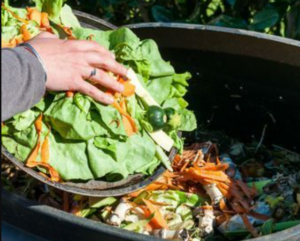
- Rotten fruits and vegetables.
- Egg Shells
- Used Tea Bags – You can use tea bags that are used while preparing tea. But you have to be careful while using it. Before adding it to the kitchen compost please wash and dry it properly. Do not use tea bags that contain milk and sugar in it.

2. What we should not add?
(i) Dairy Products – Do not add milk or any dairy products.
(ii) Cooked Food- Do not add any cooked food or last night’s leftover food like curries, chapati, rice, etc.
(iii) Meat And Fish – Do not add any meat or fish.
(iv) Sugar & Sweets – Avoid adding sugar, honey, or any sweet dish otherwise aunts will come.
(v) Wet Waste – Do not add any wet waste. If your peels are wet, then make sure you dry them completely before they go in the container.
(vi) Rotten and Sweet – Avoid vegetables with fungus and insects. You can add old rotten vegetables but do not add any vegetables which are already having fungus and insects in them. Generally, in brinjal insects are there, so chop the brinjal first to check if insects are there or not.
Note:
- To create kitchen compost, an equal ratio of both green and brown materials is necessary. If there is more green material than brown, the decomposition process will take longer and may result in unpleasant odors.
Use a container to dump the Kitchen waste 

Container Selection and Preparation:
(i) One big container is required:
- To collect the kitchen waste, you can use a larger, deeper container for composting depending on the amount of waste. You can take any clay pot or plastic container (bucket).
- Generally, clay pots come with a hole, and they are porous also.
- If you are taking a plastic container, then make a hole in it.
- Avoid Cement pots for making kitchen compost because it is very difficult to make holes in cement pots.
(ii) Proper Flow of Moisture and Oxygen:
- Ensure there is a proper flow of moisture and oxygen in the mixture to make compost from waste. To decompose the waste, oxygen or air plays a big role.
- There should be a regular supply of air inside the container; otherwise, it will be smelly.
(iii) Holes in the Container:
- The container should have holes.
- When this process starts, waste starts decomposing and water comes out from the container. So, there should be one hole beneath the container to shed the water away.
(iv) Collect Water and Use it as a Fertilizer:
- You can collect this water, which is very nutritious and also called liquid fertilizer (tea).
- You can give this water to your plants; it will work as a liquid compost.
(v) Covering the Container:
- Make sure that the container should be covered so that any insects and rats would not enter it.
- You can use any plate or tray to cover the pots or containers.
Benefits of Kitchen Waste Compost

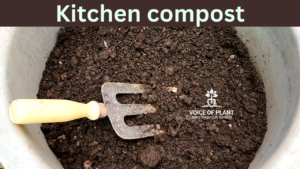
- With just a little knowledge, you can make organic compost for your plants from kitchen waste.
- This will not only make the soil fertile for your plants, but the plants will also get enough nutrients.
- The special thing is that there is no cost in making compost from kitchen waste.
- It is a very easy process.
- So, now use your kitchen waste wisely.
It was all about the material and ingredients required to make kitchen compost.
Keep collecting your kitchen waste !!!
Happy Gardening !
Make Your Own Garden!