


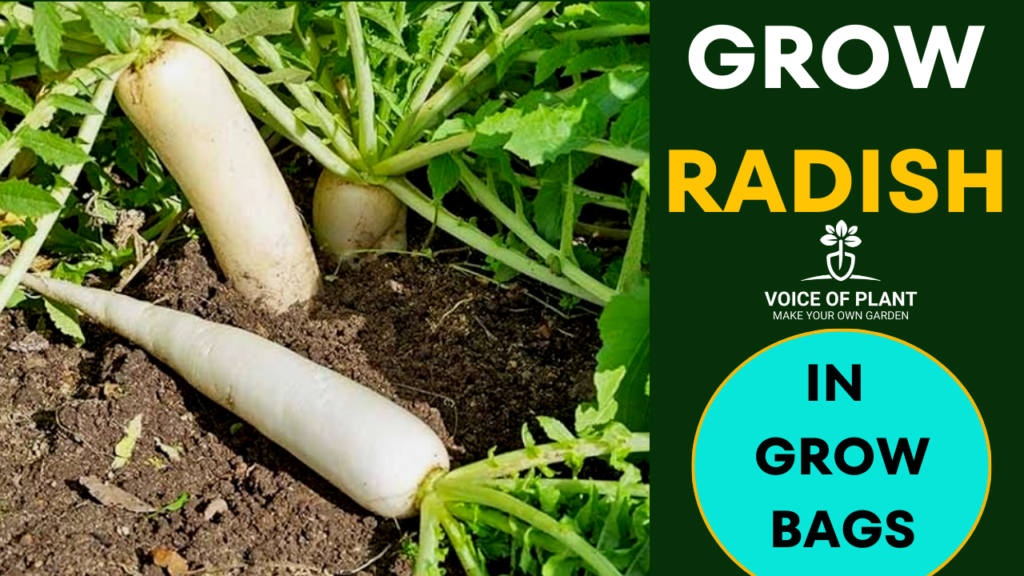
Radishes are a good source of antioxidants and help to flush out toxins from the body. What if you could get organic and unadulterated homegrown radishes? Isn’t that exciting?
Well! In this detailed write-up, we will be learning how to grow radishes at home with all the necessary precautions.
Best Season to Grow Radish
Radishes are a winter season crop, typically grown in winter. However, their seeds need to be germinated before winter starts. The best duration for growing and consuming radishes is from October to March.
From where to get Radish Seeds
Generally, at all the nurseries good quality seeds can be found. Also, you can purchase seeds online.
Grow Bags for Radish


For vegetables like radishes or carrots, it is highly recommended to use grow bags sized at 12” x 18” inches.
- In buckets or other pots, these vegetables may not grow properly.
Radishes, when grown in buckets or containers, often lack the necessary space for proper width, resulting in only 4-5 radishes per batch.


- It is essential to choose high-quality grow bags to avoid tearing during the growing process.
- Good-quality grow bags are readily available in the market.
Soil Mixture for Radish


- Soil: Collect soil from nearby nurseries or surroundings. Clean, sieve, and remove any unwanted debris.
- Compost: Add any compost, approximately 1/4th of the soil. Vermicompost is a suitable option.
- Epsom Salt: Optionally, add a small amount of Epsom salt.
- Fungicide: Include a small quantity of fungicide. Cinnamon powder can also be used as an alternative.
- Construction Sand: Add sand in the same quantity as the compost. If the soil is clayey, increase the amount of sand in the mixture.
Mix all the ingredients thoroughly and fill the prepared mixture into the grow bags.
Water the soil before sowing seeds


- Ensure the soil receives ample water until the bottom soil is well-moisturized.
- Allow the bags to sit for 10-12 hours to ensure proper absorption of moisture and settling of the soil.
Sowing Radish Seeds in the Soil
1. Make holes at appropriate distances in the soil-filled grow bags.
- Fill these holes with coco peat and place the seeds on the coco peat. Coco peat is used here because it facilitates quick seed germination.
2. After placing the seeds, spray an adequate amount of water to ensure proper moisture for both the seeds and coco peat.
3. Subsequently, regularly spray water whenever the top layer of the soil or coco peat appears dry. Avoid using mugs or pipes for watering to prevent seeds from shifting; instead, use only sprays.
4. Position the grow bags in an area with a minimum of 3 hours of direct sunlight. Adequate sunlight is crucial for the proper growth of radishes.
5. Minimize unnecessary movements of the bags; once placed, keep them in the same position.
Germination of Seeds
1. After 5-6 days, some seeds will likely have germinated.
2. By the 10th to 12th day, seedlings should become visible.
- If seedlings appear bent, it indicates insufficient sunlight. Ensure they receive an adequate amount of sunlight for proper growth.
3. Check that seedlings have sufficient space between them.
- Radishes require space to grow, and if there isn’t enough room between two seedlings, radishes may not develop properly.
Repotting of Seedlings
While vegetables like carrots, radishes, spinach, and others generally do not require repotting, if there is a lack of space between seedlings, consider repotting them to provide the necessary room for healthy growth.
Following these steps will help ensure successful germination and optimal growth of radish seedlings.
- Take out the seedling carefully with the help of any tool.
- Dip the roots of uprooted seedling in water for at least 5-10 minutes in any vessel.
- Now, sow the seedling in another grow bag by making a hole in the soil.
- Adjust all other seedlings also, if they are tilted then align them.
- Pour water properly now and always prefer to do repotting in the evening
One-Month Growth: Radish Emerges from the Soil
- After approximately one month, you should start to see the radishes emerging from the soil.
Pest Identification and Remediation:
During this period, there might be instances of pest attacks, which can be identified by:
- Yellowing leaves
- Leaves with holes (indicating insect damage)
- Possible presence of leaf miners
To address pest issues, take the following measures:
1. Immediate Removal of Damaged Leaves:
- Remove any leaves that show signs of damage promptly to prevent further pest spread.
2. Neem Decoction Treatment:
-
- Boil neem leaves in water to create a neem decoction.
- Sieve the neem decoction to obtain a clear solution.
- Dilute the neem decoction with ten parts water.
- Spray this diluted neem solution on the leaves 2-3 times to combat pests.
These measures will help protect your radish plants from pests and promote healthy growth.
Fertilizer for Radish Plants
Radish plants typically do not require additional fertilizers, as the soil is already enriched with compost, maintaining adequate nutrient levels.
Watering Tips to Radish Plants
Radishes are typically cultivated in winter, where the soil tends to retain moisture for longer periods. It is essential to water the plants judiciously:
1. Watering Frequency:
-
- Water the radishes when the soil is dry, as the winter season often keeps the soil moist for extended periods.
- Avoid frequent watering, as overwatering can lead to plant decay, while underwatering may impede plant growth. Maintain a balanced watering schedule.
2. Balanced Watering:
-
- Strive to strike a proper balance in watering to ensure the health and growth of the radish plant.
3. Watering Technique:
-
- When watering, use a mug and apply water from the sides to prevent any potential damage to the plant.
By adhering to these watering practices, you can support the well-being and successful growth of your radish plants.
Harvesting Radish
After approximately 2 months, you will observe the radishes emerging from the soil. Follow these steps for a successful harvest:
1. Timing:
-
- Uproot the radishes when they become visible, typically around the 2-month mark.
2. Harvesting Technique:
-
- Gently uproot the radishes from the soil, ensuring minimal damage to the roots.
3. Result:
-
- The outcome will be a bountiful harvest of organic radishes with healthy leaves.
4. Careful Measures:
-
- Throughout the growth period, adhere to the provided measures diligently to ensure the successful cultivation of homemade, organic radishes.
By following these guidelines, you will enjoy the satisfaction of harvesting homegrown, organic radishes with robust and healthy leaves.
HAPPY GARDENING!!