


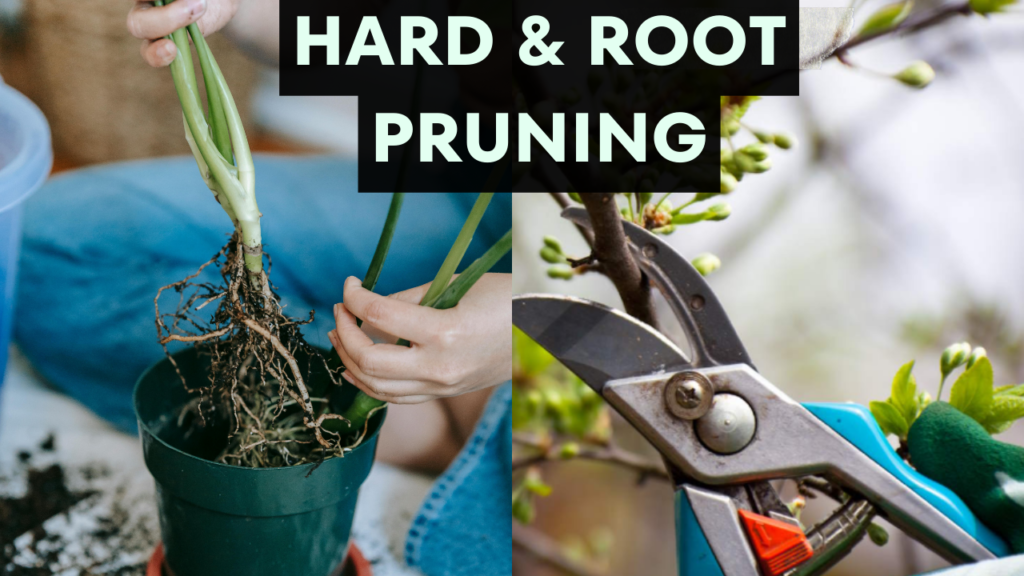
Hard Pruning and Root Pruning of Plants
Introduction
Pruning is a crucial aspect of plant care, promoting healthy growth and maintaining aesthetic appeal. Among various pruning techniques, hard pruning and root pruning are commonly employed to revitalize plants and enhance their overall health. But can these two pruning methods be executed simultaneously? Let’s delve into the details.
What is Hard Pruning and Root Pruning?
Hard pruning involves the significant removal of plant material, often cutting back branches or stems to encourage new growth and rejuvenation.
On the other hand, Root pruning targets the plant’s root system, trimming or cutting roots to stimulate growth, improve nutrient uptake, and prevent root-bound conditions.
Can Hard Pruning and Root Pruning Be Performed Together?
Yes, hard pruning and root pruning can indeed be conducted simultaneously.
This is because, during root pruning, plants are typically removed from their pots, providing an opportune moment for repotting or soil replacement.
- Experienced gardeners often undertake both pruning tasks simultaneously to streamline the process and minimize plant disturbance.
The Process of Hard Pruning


Hard pruning involves several steps to ensure the plant’s health and vitality.
- Firstly, assess the plant’s overall condition and identify areas requiring pruning.
- Use sharp, clean tools to make precise cuts, removing dead or diseased branches, as well as any overgrown or unwanted foliage.
- It is crucial to prune strategically, considering the plant’s growth habits and desired shape.
The Process of Root Pruning


Root pruning, while equally important, focuses on the plant’s underground structure.
- Begin by gently removing the plant from its container, taking care not to damage the roots.
- Trim away any circling or congested roots, aiming to encourage outward growth and prevent root binding.
- After root pruning, repot the plant in fresh, well-draining soil, ensuring proper anchorage and support.
Best Time for Pruning
The timing of pruning plays a significant role in its effectiveness. The early spring season is often considered the optimal time for both hard pruning and root pruning.
- During this time, plants are typically dormant or just beginning to emerge from dormancy, making it an ideal period to prune without causing excessive stress or harm.
- This timing allows plants to recover and regrow vigorously during the growing season ahead.
Important note:
Hard pruning is typically best done in the spring season when plants are actively growing and can recover more easily from the pruning stress.
On the other hand, root pruning can technically be done in any season.
- However, it is generally recommended to perform root pruning during the dormant season or early spring for most plants. This timing minimizes stress on the plant and promotes successful recovery.
|
Must read: All About Hard Pruning of Plants |
Benefits of Simultaneous Pruning
Combining hard pruning and root pruning offers several advantages, including:
1. Minimizing plant stress by completing multiple tasks in one session.
2. Promoting balanced growth above and below the soil surface.
3. Enhancing overall plant health and vigor over time.
Considerations for Different Plant Types
Perennial plants may require both hard pruning and root pruning to prevent overcrowding and maintain healthy root systems.
Tools Needed for Pruning
Ensure you have the right tools for the job, including:
- Sharp pruning shears for clean cuts.
- Root pruning shears or a sharp knife for root trimming.
- Potting soil or compost for repotting, if necessary.
Signs Your Plant Needs Pruning
It is essential to recognize when your plant requires pruning intervention. Signs that pruning may be necessary include:
- Dead or diseased branches.
- Excessive foliage blocking sunlight or airflow.
- Stunted growth or poor flowering/fruiting.
Aftercare Following Pruning
After completing pruning activities, provide appropriate aftercare to support plant recovery and growth:
1. Water the plant thoroughly to reduce transplant shock and promote root establishment.
2. Apply a balanced fertilizer to replenish nutrients and encourage new growth.
3. Monitor the plant regularly for signs of stress or disease, addressing any issues promptly.
Conclusion
In conclusion, hard pruning and root pruning can indeed be performed together, offering an efficient way to promote plant health and vitality. By following proper techniques and precautions, gardeners can achieve successful pruning outcomes and enjoy flourishing, well-maintained plants throughout the growing season.
Make Your Own Garden!